
Invited Speakers
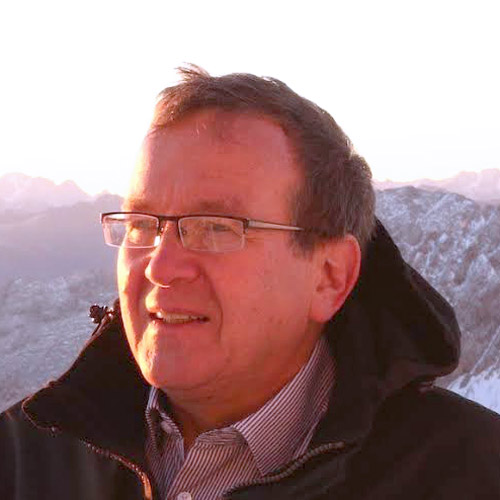
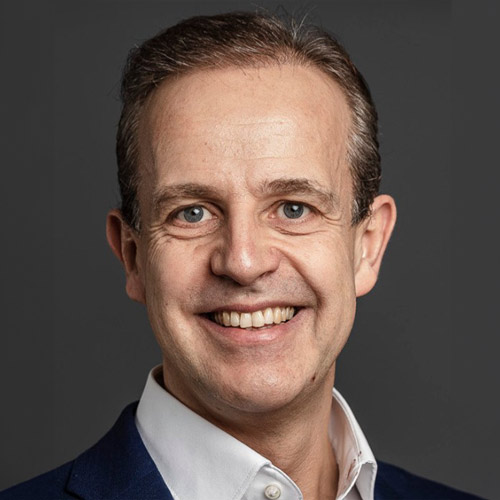
Eberhard Bodenschatz
Max Planck Institute for Dynamics and Self-Organization
Gottingen, Germany
Can We Understand Clouds Without Turbulence?
Eberhard Bodenschatz studies the fundamental physics of active complex systems. He works on fluid physics ranging from microfluidics to turbulence and cloud physics, and on dynamical self-organisation in cellular biophysics from cells to organs, as well as in bottom-up synthetic biology. He applies the knowledge gained from these fundamental research activities to both natural and engineered systems, investigating how turbulence and thermal convection affect cloud physics, as well as how to create artificial cells, engineer heart muscle, and develop strategies for treating human cardiac arrhythmias. He is Scientific Director at the Max Planck Institute for Dynamics and Self-Organisation in Göttingen, Germany, Professor of Physics at the University of Göttingen, and Adjunct Professor of Physics and Mechanical and Aerospace Engineering at Cornell University, USA. He was Chairman of the Chemistry, Physics, and Technology Section of the Max Planck Society. He is an elected member of the German Academy of Sciences Leopoldina, the Academy of Sciences of Lower Saxony, and the American Association for the Advancement of Science. He is a Fellow of the APS, Euromech, EPS, and IOP. He is the recipient of the Corrsin Award of the Division of Fluid Mechanics of the American Physical Society.
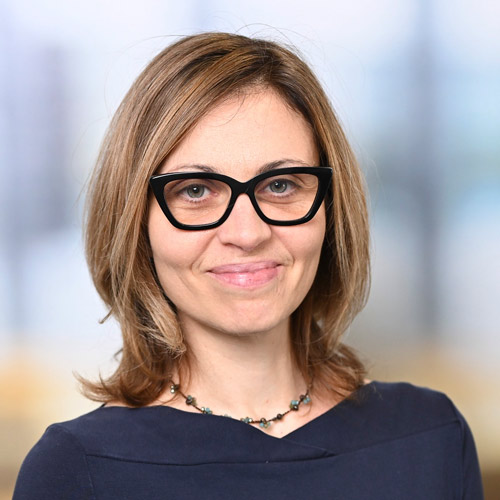
Valeria Garbin
TU Delft
Delft, The Netherlands
Flow Physics of Particle-stabilized Droplets
George Haller
ETH Zurich
Zurich, Switzerland
Modeling and Controlling Nonlinear Dynamics from Data
(without Neural Networks)
George Haller is a professor of Mechanical Engineering and Mathematics at ETH Zürich, where he holds the Chair in Nonlinear Dynamics and heads the Institute for Mechanical Systems. His prior appointments include tenured faculty positions at Brown, McGill, and MIT. He also served as the inaugural director of Morgan Stanley’s Fixed Income Modelling Center. Professor Haller is a recipient of a Sloan Fellowship in mathematics, the ASME Thomas Hughes Young Investigator Award, a School of Engineering Distinguished Professorship (McGill), the Stanley Corrsin Award of the APS and the Lyapunov Award of the ASME. He is an external member of the Hungarian Academy of Sciences, member of the Academia Europaea, and elected fellow of SIAM, APS and ASME. He serves as feature editor at Nonlinear Dynamics and senior editor at the Journal of Nonlinear Science. His research focuses on nonlinear dynamical systems with applications to mechanical vibrations, coherent structures in turbulence, and data- and equation-driven model reduction for physical systems. He has authored three monographs in these areas.
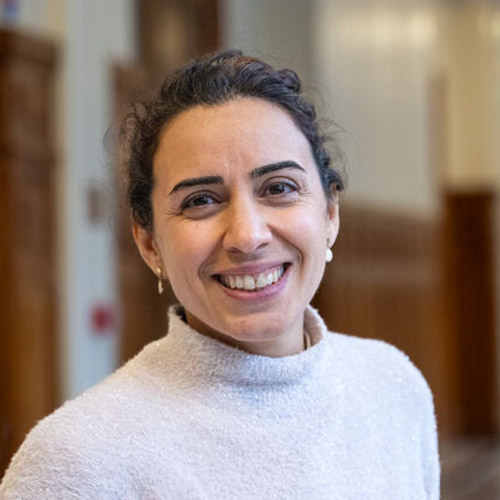
Taraneh Sayadi
Conservatoire National Arts et Métiers
Paris, France
Optimising Complex Flows: from Gradients to Ensembles
Prof. Sayadi received her PhD from Stanford University in 2012. She subsequently held postdoctoral research positions at several internationally renowned institutions, including École Polytechnique (France), Imperial College London (UK), and RWTH Aachen University (Germany). From 2018 to 2023, she served as a Chargée de Recherche (CNRS) at Sorbonne University. In 2023, she was appointed Chair Professor in Scientific Computing in the Department of Applied Mathematics and Statistics at the Conservatoire National des Arts et Métiers (CNAM) in Paris, where she now leads the Mathematical and Numerical Modeling Laboratory (M2N). Her research interests include scientific machine learning, high-performance computing, data-driven model development and model reduction, as well as flow control and data assimilation.
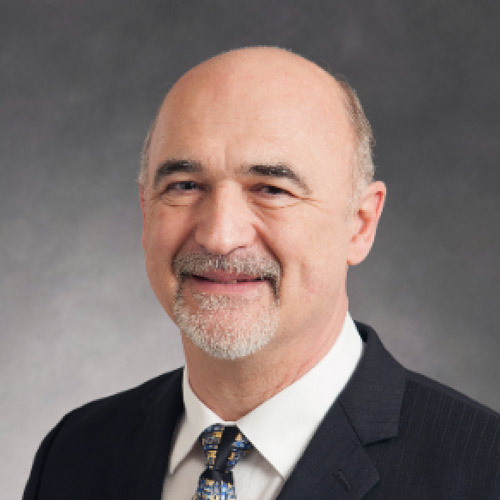
Philippe Spalart
Flexcompute
Boston, USA
Detached-Eddy Simulation is 30
Philippe Spalart studied Mathematics and Engineering in Paris, and obtained an Aerospace PhD at Stanford/NASA-Ames in 1982. Still at Ames, he conducted Direct Numerical Simulations of transitional and turbulent boundary layers. Moving to Boeing in 1990, he created the Spalart-Allmaras one-equation Reynolds-Averaged Navier-Stokes turbulence model. He wrote a review and co-holds a patent on airplane trailing vortices. In 1997 he proposed the Detached-Eddy Simulation approach, blending RANS and Large-Eddy Simulation to address separated flows at high Reynolds numbers with a manageable cost. He received the AIAA Fluid Dynamics Award in 2006, became a Boeing Senior Technical Fellow in 2007, was elected to the National Academy of Engineering in 2017, and had the AIAA Reed Award for 2019. His papers have been cited 54,000 times. Recent work includes refinements to the SA model and DES, computational aeroacoustics, theories for aerodynamics and turbulence, and the design of research experiments. Philippe retired from Boeing in 2020. He remained very active in research and works part-time as Head of Flow Physics at Flexcompute.
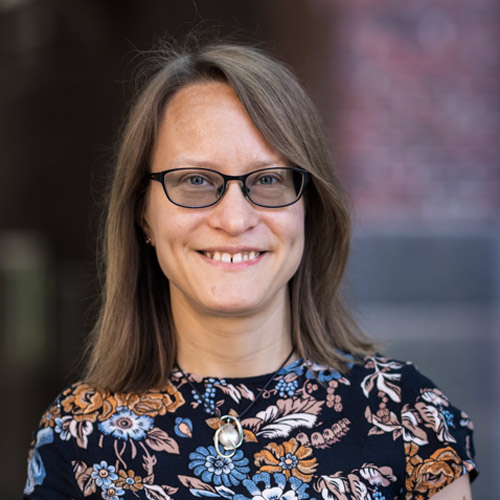
Outi Tammisola
KTH
Stockholm, Sweden
Multiphase Flow of Complex Fluids
Outi Tammisola is Full Professor of fluid mechanics at KTH Royal Institute of Technology, Sweden. She obtained her PhD 2011 from KTH, then became a postdoc in Univ. of Cambridge (UK), and assistant professor in Univ. of Nottingham. Her research focus is on high-performance computing and synergetic experiments for viscoelastic and yield-stress fluids, especially: (i) multiphase flow, (ii) wetting and surface interactions, (iii) instabilities and turbulence. This research often reveals drastic differences compared to Newtonian fluids such as water. She received 2019 an ERC Starting Grant on wetting and surface interaction of complex fluids, and 2024 an ERC Consolidator Grant on elasto-inertial turbulence.